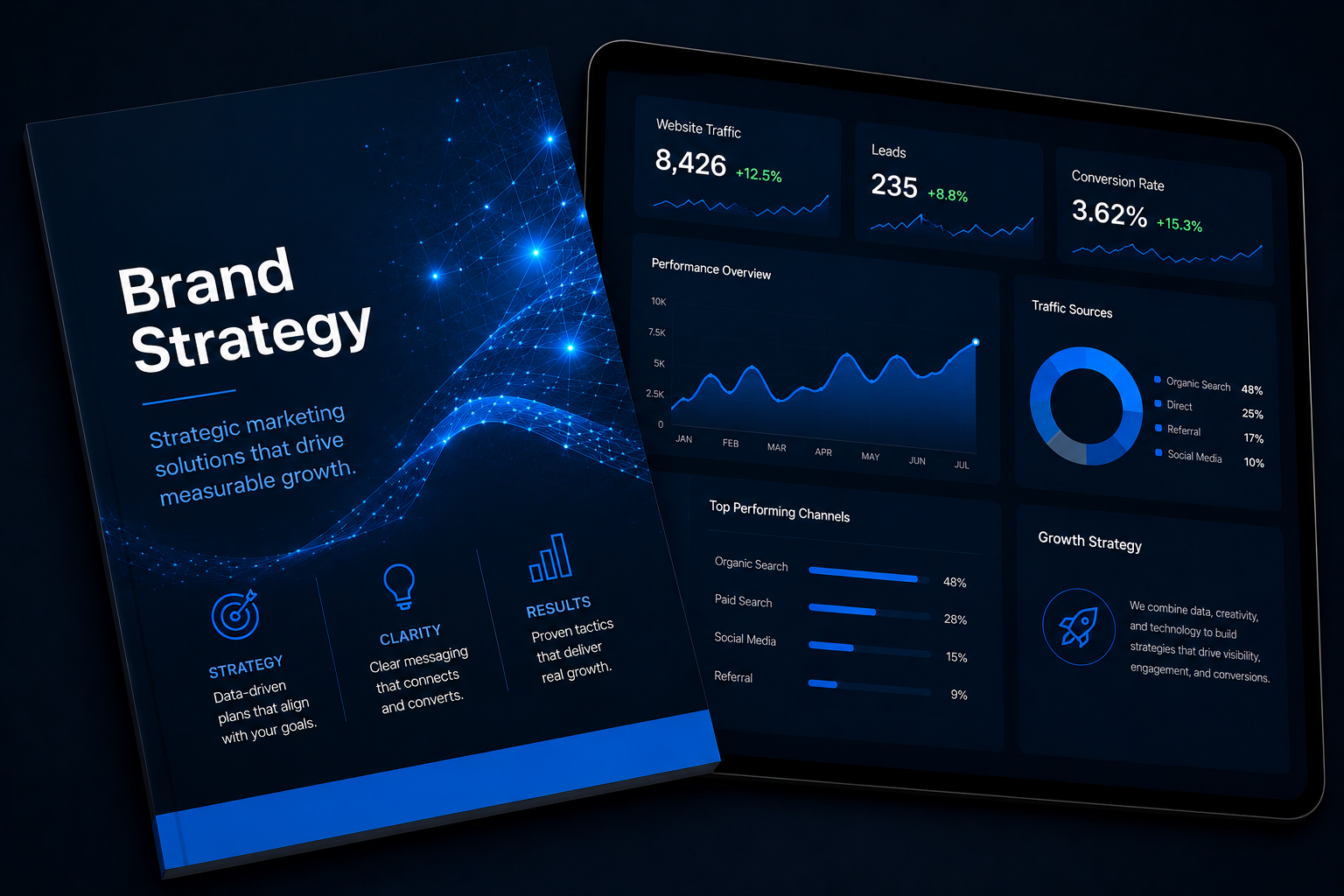

Why You Need a Digital Marketing Strategy
IP Marketing Solutions • February 3, 2020

Businesses rarely suffer from a lack of marketing options. Search, social media, email, paid ads, websites, photography, video, reviews, local listings, and print all compete for attention and budget. The harder problem is deciding which actions belong together, which customers they are meant to serve, and how to tell whether the work is helping.
A digital marketing strategy is a practical answer to that problem. It is not a stack of trendy channels or a rigid calendar. It is a shared plan for reaching the right audience with a clear message, guiding them to a useful next step, and learning from results.
A strategy gives activity a purpose
Without a plan, marketing tends to become reactive: a campaign is launched because a competitor is running one, posts are published because a calendar says to publish, and website changes are made without knowing what customer question they should solve. Those actions may create activity, but activity alone is not progress.
A strategy begins with business goals. Does the company need more qualified inquiries, better customer retention, stronger local visibility, increased online sales, or a clearer position in a competitive market? The answer determines which audience matters, what offer needs attention, and which measures should be reviewed.
Understand the customer before choosing channels
Good planning starts with the customer’s decision process. What problem are they trying to solve? What information do they need before contacting a business? Where do they look? What concerns create hesitation? Sales conversations, customer-service questions, reviews, search queries, and website analytics are all useful sources of insight.
Define audiences in ways that help practical decisions. A business may have different messages for a first-time buyer, an existing customer, a local prospect with an urgent need, and a professional partner. Not every channel must reach every audience. The goal is relevance, not ubiquity.
Make the website the central destination
For many organizations, the website is the place where marketing channels converge. Paid ads, search results, social posts, local profiles, referrals, and email links all eventually ask the site to do the same work: explain the offer and make the next step easy.
That makes clear website content essential. A focused services page should describe what the business does, who it helps, how the process works, and how to inquire. It should be current, readable on mobile, and aligned with the promises made in campaigns.
Choose a small set of priorities
A strategy should create focus. Identify the channels most likely to help the current goal, then assign an owner, a realistic cadence, and a measure of success. For example, a local service business may prioritize its Google Business Profile, a core service page, review requests, and carefully targeted paid search before adding several new social platforms.
Sequencing matters. It is inefficient to spend heavily on ads before the landing page and contact process work. It is also difficult to evaluate content if no one has defined what action should follow a visit. Build the foundation first, then add campaigns that have a clear job.
Measurement turns a plan into a learning system
Choose outcomes that the business can recognize: qualified leads, booked appointments, purchases, pipeline, retained customers, revenue, or cost to acquire a customer. Channel metrics such as impressions, followers, and clicks can be useful diagnostics, but they are not the destination.
Google Analytics, CRM data, call records, and direct customer feedback can show different parts of the journey. Review them together. If website visits rise but inquiries do not, inspect the offer, landing page, form, and sales follow-up. If a campaign produces leads that do not fit, refine the audience or message rather than celebrating the volume.
Keep the strategy adaptable
A useful plan is reviewed, not forgotten. Customer needs, market conditions, staff capacity, search behavior, and platform features change. Set a regular review rhythm, document meaningful changes, and adjust based on evidence. Avoid changing everything at once; clear hypotheses make results easier to interpret.
The U.S. Small Business Administration’s marketing and sales guidance is a helpful starting point for planning around customers, positioning, and measurable goals. The most valuable strategy is one the business can actually carry out consistently.
If you need help connecting your website, content, local visibility, and campaigns into a focused plan, contact IP Marketing Solutions for a practical conversation.
RECENT POSTS



Ready for a Smarter Marketing Strategy?
Let's talk about your goals and build a plan that gets real results.
or call us today at 731-610-2375